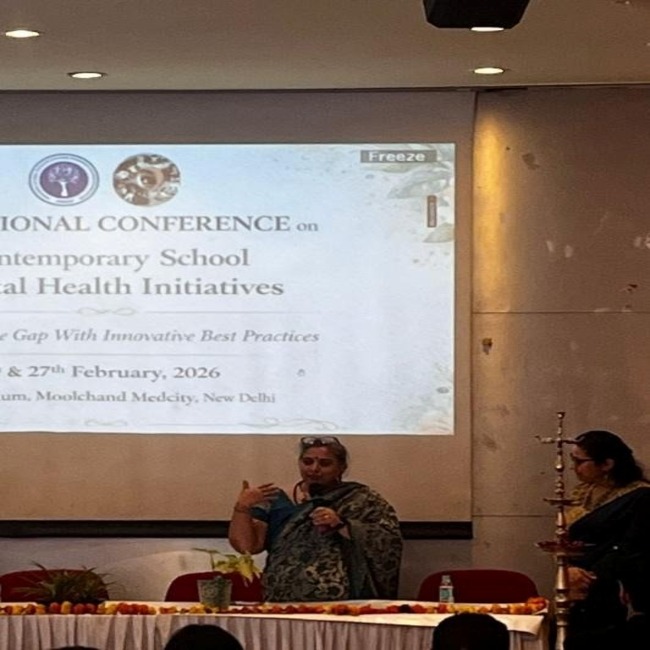
Principal and School Counsellor participate in National Conference on School Mental Health
On 26th February 2026, Moolchand Medcity organised the ‘National Conference on Mental Health’, a significant initiative dedicated to strengthening dialogue and collaboration around the evolving landscape of school mental health in India. The conference brought together a wide spectrum of stakeholders from across the Indian education system, including school principals, counsellors, teachers, psychologists, and mental health professionals. It served as a dynamic platform to deliberate on contemporary changes, emerging psychological concerns, preventive strategies, and innovative practices being implemented in educational institutions.
The discussions centred on pressing concerns such as increasing academic stress, socio-emotional challenges among students, the psychological impact of digital exposure, and the growing need for structured and sustainable mental health frameworks within schools and universities. Through insightful panel discussions, research presentations, and interactive exchanges, participants explored practical approaches to fostering emotionally secure, inclusive, and supportive learning environments.
Representing the institution at this prestigious forum were School Principal Ms Tania Joshi and School Counsellor Ms Meghna Joshi. Ms Tania Joshi was invited as a panelist, where she shared her perspectives on leadership-led mental health initiatives and highlighted the importance of embedding well-being in school culture and policy. Ms Meghna Joshi contributed to the conference through her paper presentation titled The Reflective Containment Model (A Best Practice Framework for School and University Counsellors). Her paper proposed a structured, reflective, and ethically grounded framework for counselling practice, emphasising emotional containment, professional self-awareness, and the importance of reflective supervision in strengthening student support systems. The presentation was well received for its clarity, depth, and applicability to real-world educational settings.
The conference concluded on a note of shared responsibility and renewed commitment among educators and mental health professionals to prioritise student well-being. It reinforced the importance of collaborative efforts, evidence-based practices, and continuous professional development in addressing the evolving mental health needs of students.
 In the Press
 Admissions