Class 10 and 11 participate in E-Waste Management workshop
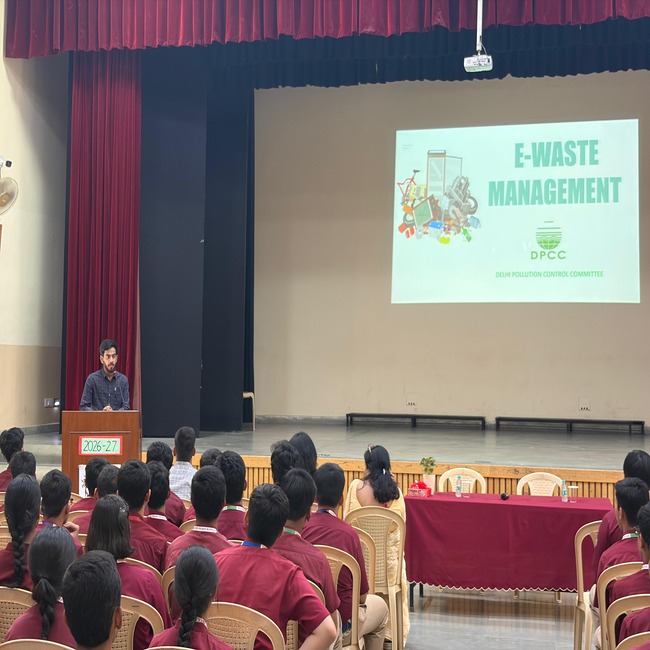
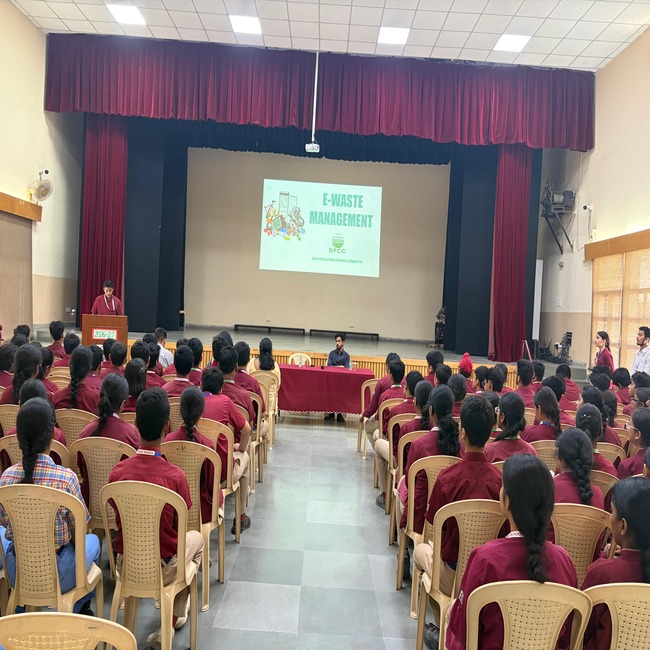
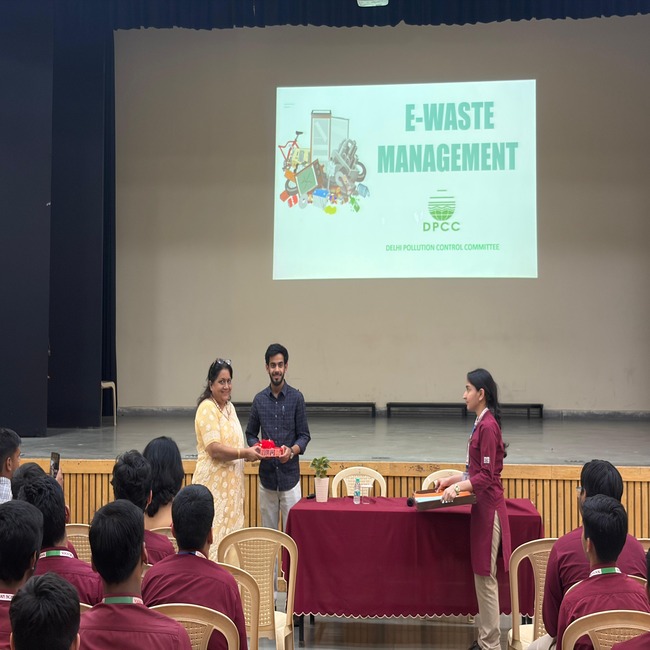
On 8 May 2026, a workshop on E-Waste Management was organised for the students of classes X and XI in collaboration with the Delhi Pollution Control Committee (DPCC). The session was conducted by the Department of Environment, Government of Delhi. The workshop aimed to create awareness among students about the the growing challenges of electronic waste and the importance of responsible disposal and recycling practices.
The session began with a thoughtful discussion on how technology, while making life easier and more connected, has also led to a rapid increase in electronic waste. Students were informed that e-waste includes discarded items such as computers, mobile phones, chargers, batteries, televisions, and even medical equipment like MRI and X-ray machines. One of the most striking facts shared at the session was that nearly 95% of e-waste in India is handled by the informal sector using unsafe recycling methods.
It was explained that e-waste contains harmful substances such as lead, mercury and cadmium, which can severely pollute soil, water, and air if not disposed off sytematically. He also highlighted the dangers of burning e-waste, which releases toxic fumes and contributes to serious health and environmental problems.
Students were introduced to the appropriate process of e-waste management, including segregation, storage, transportation, disposal, education, community engagement, and collaboration. The importance of sending electronic waste only to authorised recyclers and manufacturer take-back programmes, was strongly emphasised to ensure the safe handling of hazardous materials.
The workshop also included practical guidelines on the do's and don’ts of e-waste disposal. Students were encouraged to repair and reuse devices whenever possible, remove personal data before disposal, and support authorised recycling centres. They were advised never to throw e-waste into regular bins, burn electronic waste, or hand it over to unauthorised scrap dealers.
As part of its commitment to environmental responsibility, the School has also taken the initiative of installing an e-waste recycling bin to encourage students to dispose of electronic waste safely and responsibly.
The workshop included an interactive question-and-answer session where students raised questions about e-waste recycling, safe disposal methods and the environmental impact of electronic waste. The students’ questions were patiently handled and they were encouraged to adopt responsible habits in their daily lives, making the session both engaging and insightful.
The session concluded with a message encouraging the students to raise awareness of e-waste management in their communities and contribute towards building a cleaner and healthier environment. Overall, the workshop proved to be highly informative and successful in sensitising students towards sustainable and responsible environmental practices.
 In the Press
 Admissions